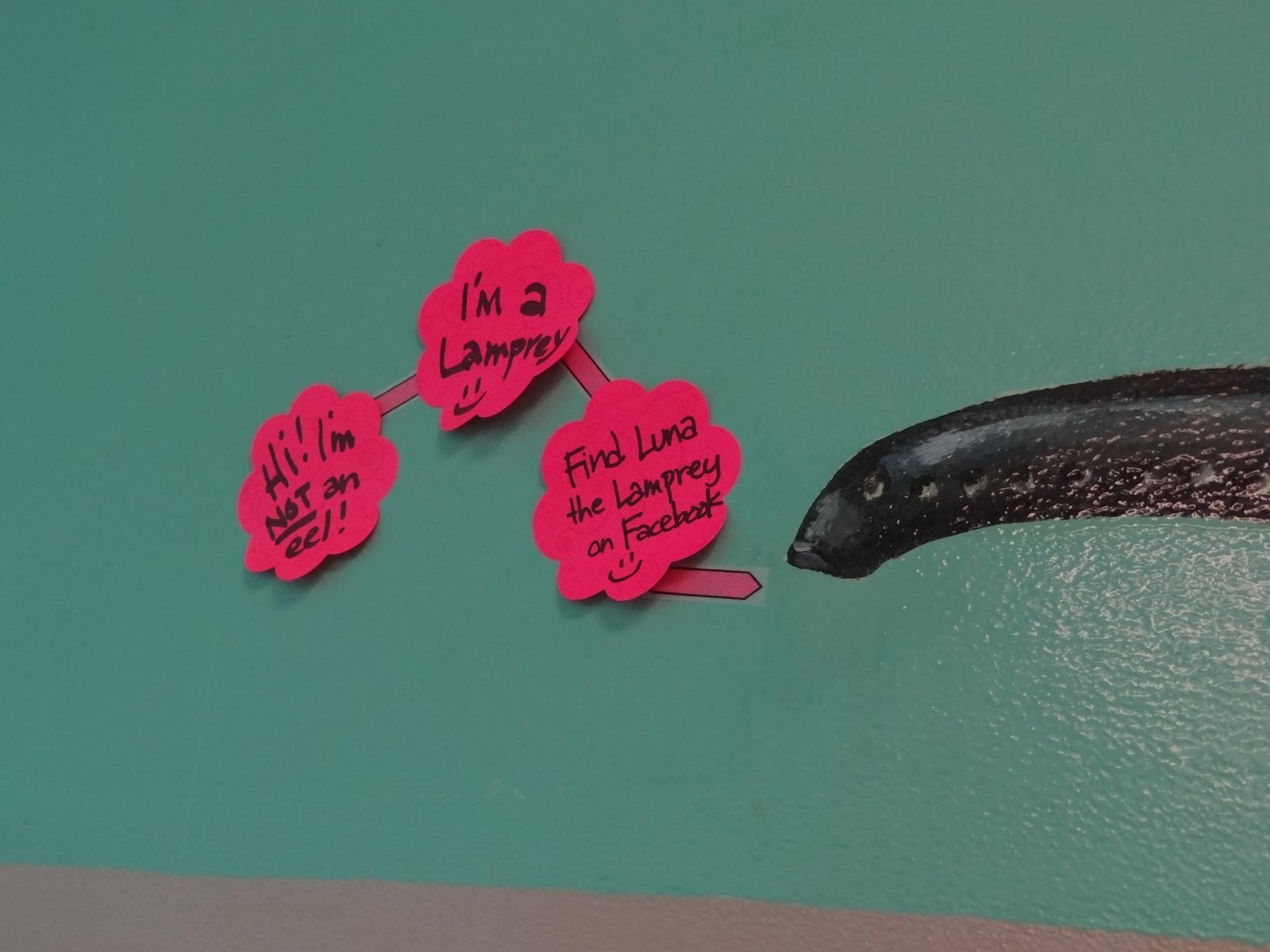
Do you know what this is?

Hi!  Do you know what this is?

I’ll give you a hint.  It’s not an eel, and I took these pictures at the viewing windows at Bonneville Dam this past weekend.  Still don’t know?

Here I am doing some guerrilla aquatic education at the public viewing windows in the dam.  And stop looking at my butt.  You can take a closer look at what I’m doing, however.
 
 
Those are Pacific lamprey!  You can learn all about Pacific lamprey by following Luna the Lamprey on Facebook, or do a google search.  Their population numbers are dwindling, and they’re an important part of the aquatic ecosystem as well as native American culture.  The Fish and Wildlife Service, and our office especially, is going lamprey-crazy right now with a lot of research and outreach efforts.  So check them out – they are a very cool fish!  And kind of cute in a way.


This is one side of Bonneville Dam – it’s a pretty incredible structure and it supplies much of the Pacific Northwest with power.  And this is apparently what a fishery biologist looks like (although it doesn’t much resemble what I look like, even when I’m at work).  Ha!

A Fish Ladder, Finally!

Chris’ Grandma Lois turned 80 on July 19th, but since he was on tour with his army band, I took the train up to Seattle to represent.  I met up with Chris’ Aunt Carol, Uncle Bruce and cousin Terra before our big family lunch and they took me to the Chittenden Locks and fish ladder on Lake Washington.  I think this was actually the first time I’ve really seen a functioning fish ladder up close, which seems kind of silly to me at this point in my career.  But it was pretty cool – they had the ladder that you could walk along side of, and then you could go inside to see the fish in the ladder through a viewing window.  As it was in the middle of July, it was the height of the sockeye upstream migration, and that’s what most of these fish were.  But it was the beginning of the Chinook migration, and we saw a big old Chinook hanging out in the fish ladder too.

Here are some boats going through the Chittenden Locks into Lake Washington.


This is the upstream end of the fish ladder, looking towards Lake Washington.


Sockeye salmon, for the most part.


Hey you fish, you’d better hurry up or you’re going to have to wait until tomorrow to get to the lake!


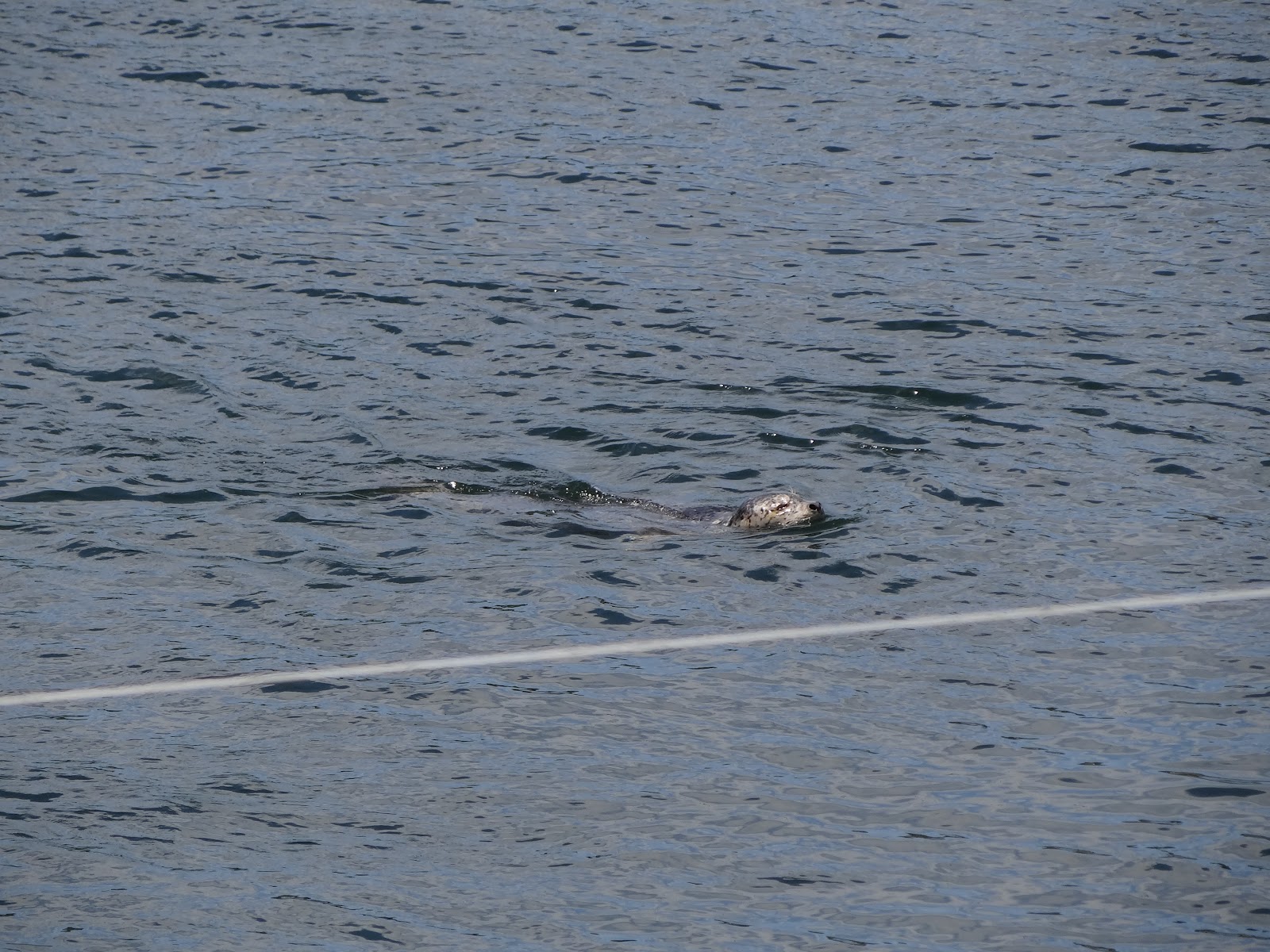
There were also seals lurking very close to the entrance of the fish ladder,
filling up on breakfast, lunch and dinner.

The mini Gyger family reunion was a great time – I think everyone had fun at Ray’s Boathouse, and I know I had a good time chatting and drinking with Aunt Kim, Uncle Bruce and Bumper later that evening.  Here’s a link to the photos I took if you’d like to check them out!

Grandma Lois’ 80th Birthday

Unchained from my desk for a day!

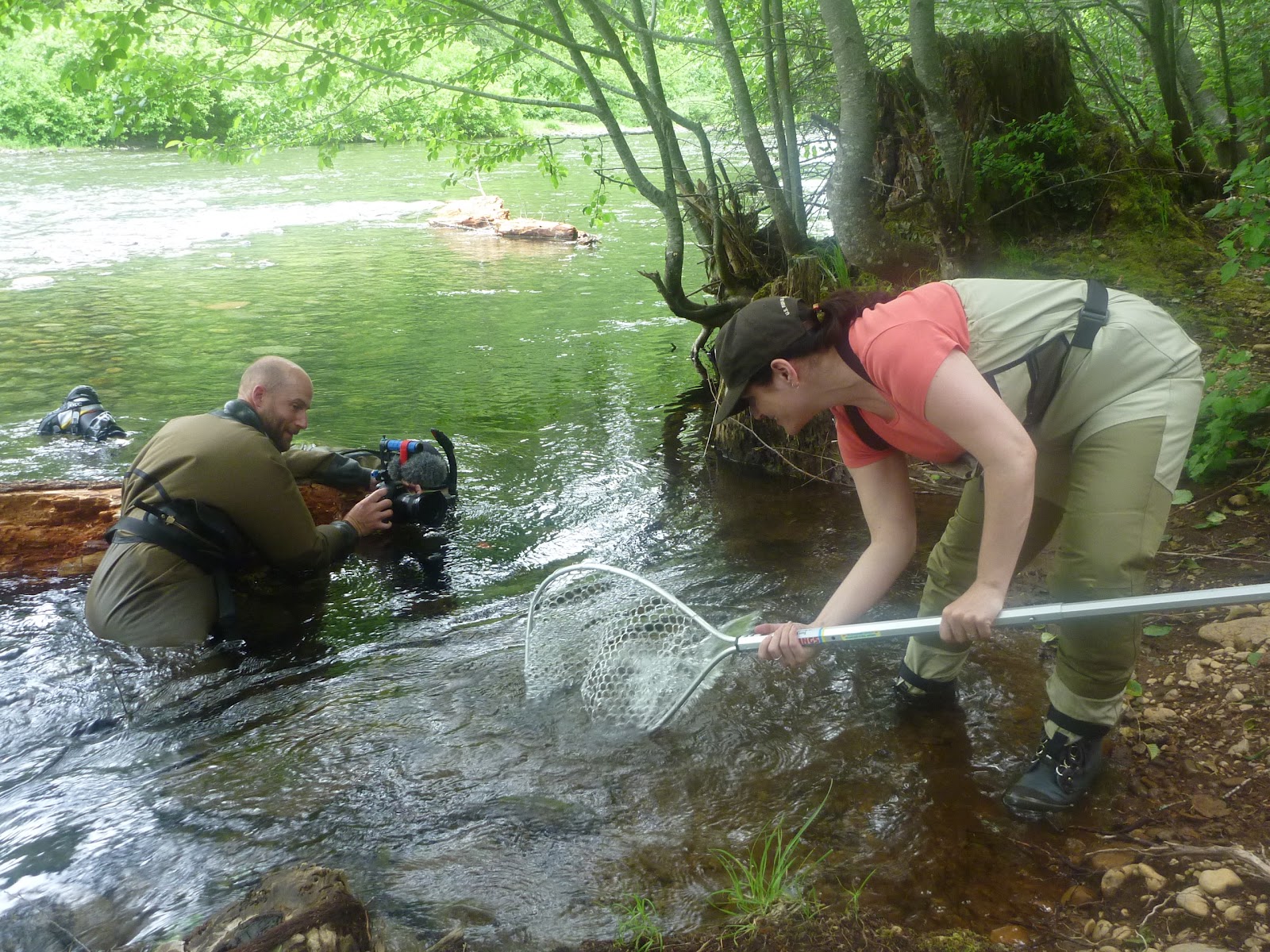
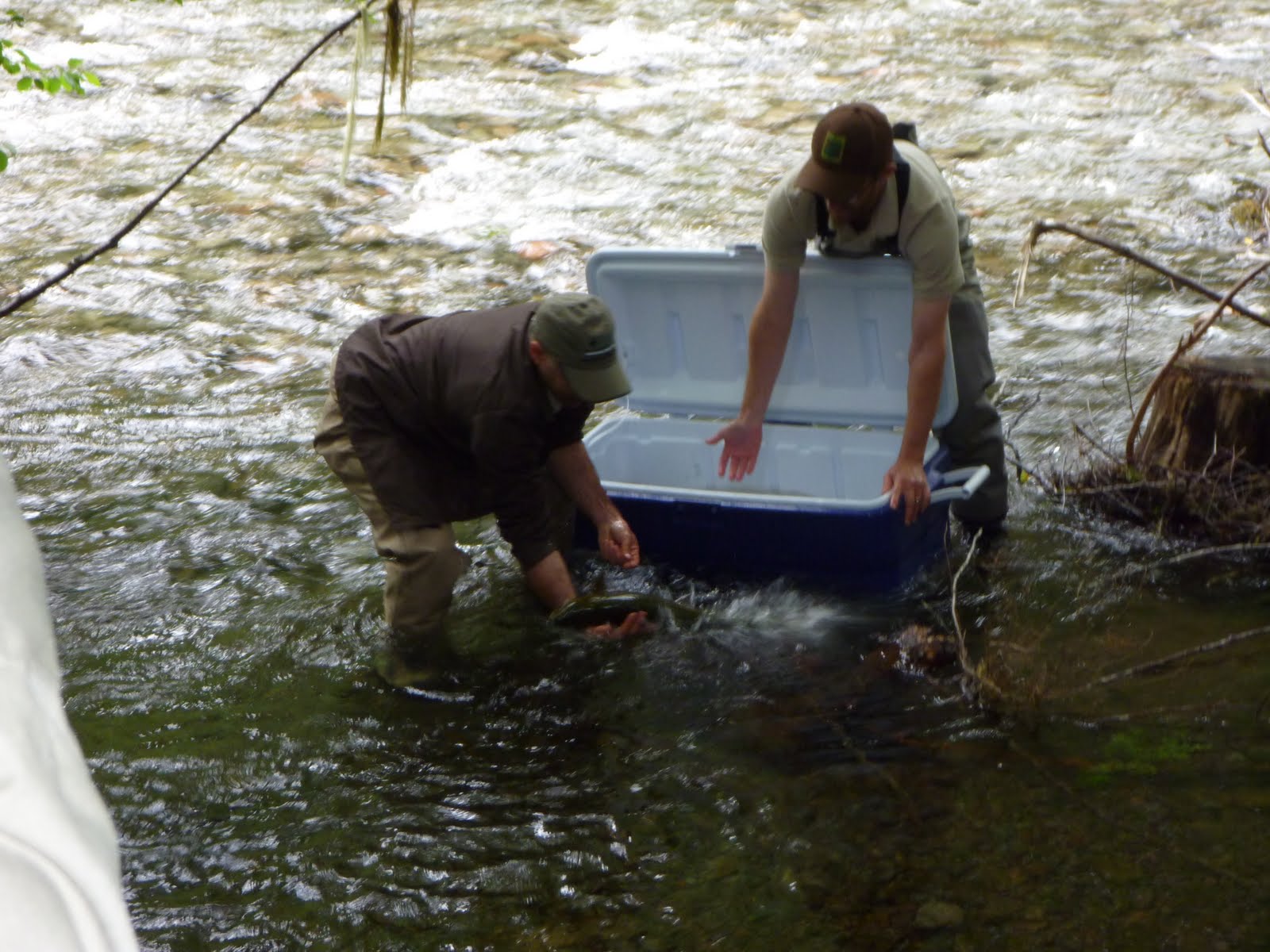
A couple of weeks ago I got to head outside to help release translocated subadult and adult bull trout into the Clackamas River for a reintroduction project that I’ve been involved with for nearly three years.  These bull trout were taken from the Metolius basin, implanted with radio tags so they can be tracked, and trucked over to the Clackamas River, where they will hopefully reproduce and re-establish a population in a part of their historic range.  It was an amazingly beautiful day out, and I hope the bull trout like their new home!

You can read more about the day at the Columbia River Fisheries Program Office’s Dish on Fish blog, here.

Bu bu bum! Bu bu bum! Bu bu bu bum…CAT SHOW!!!

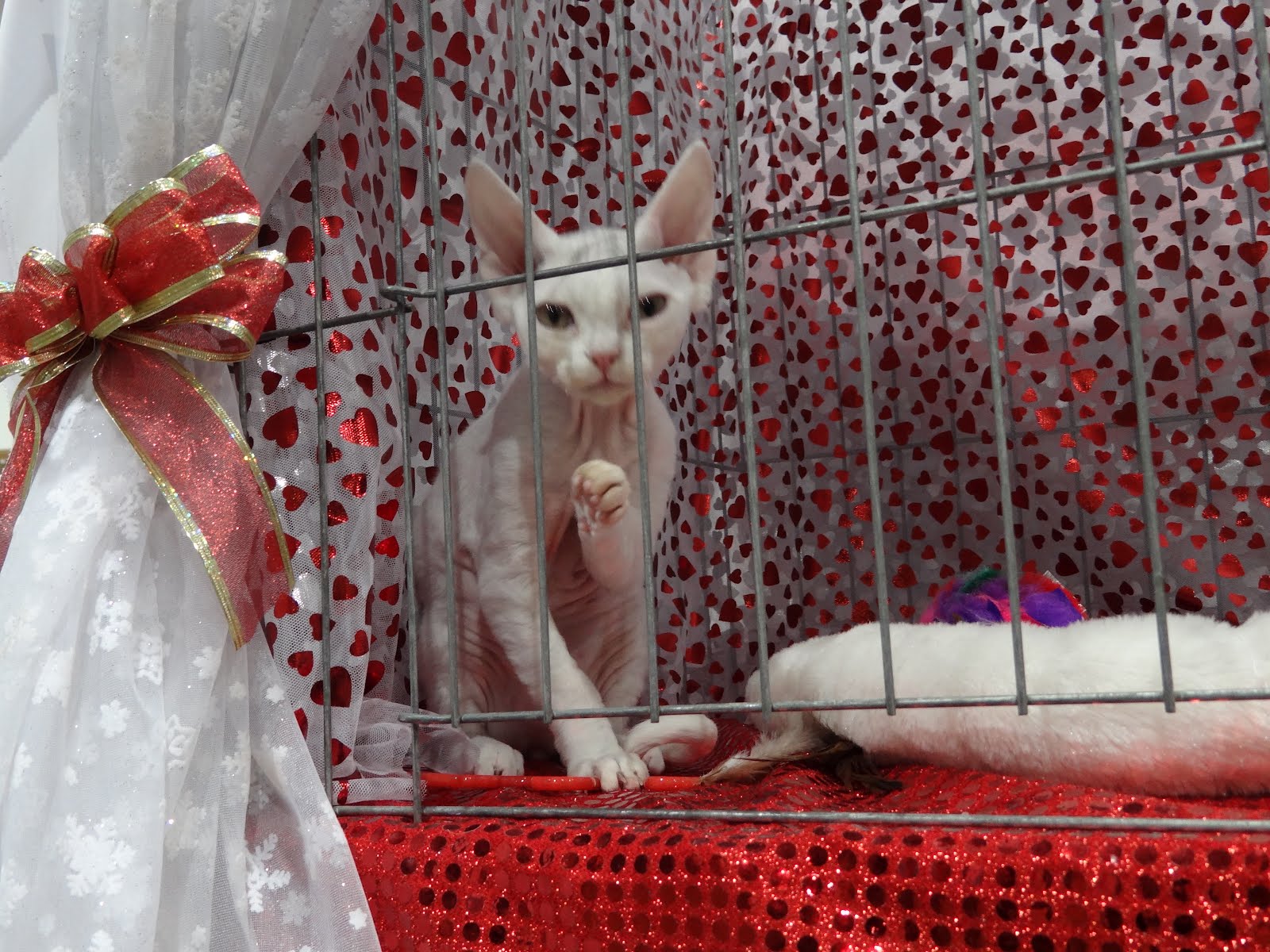
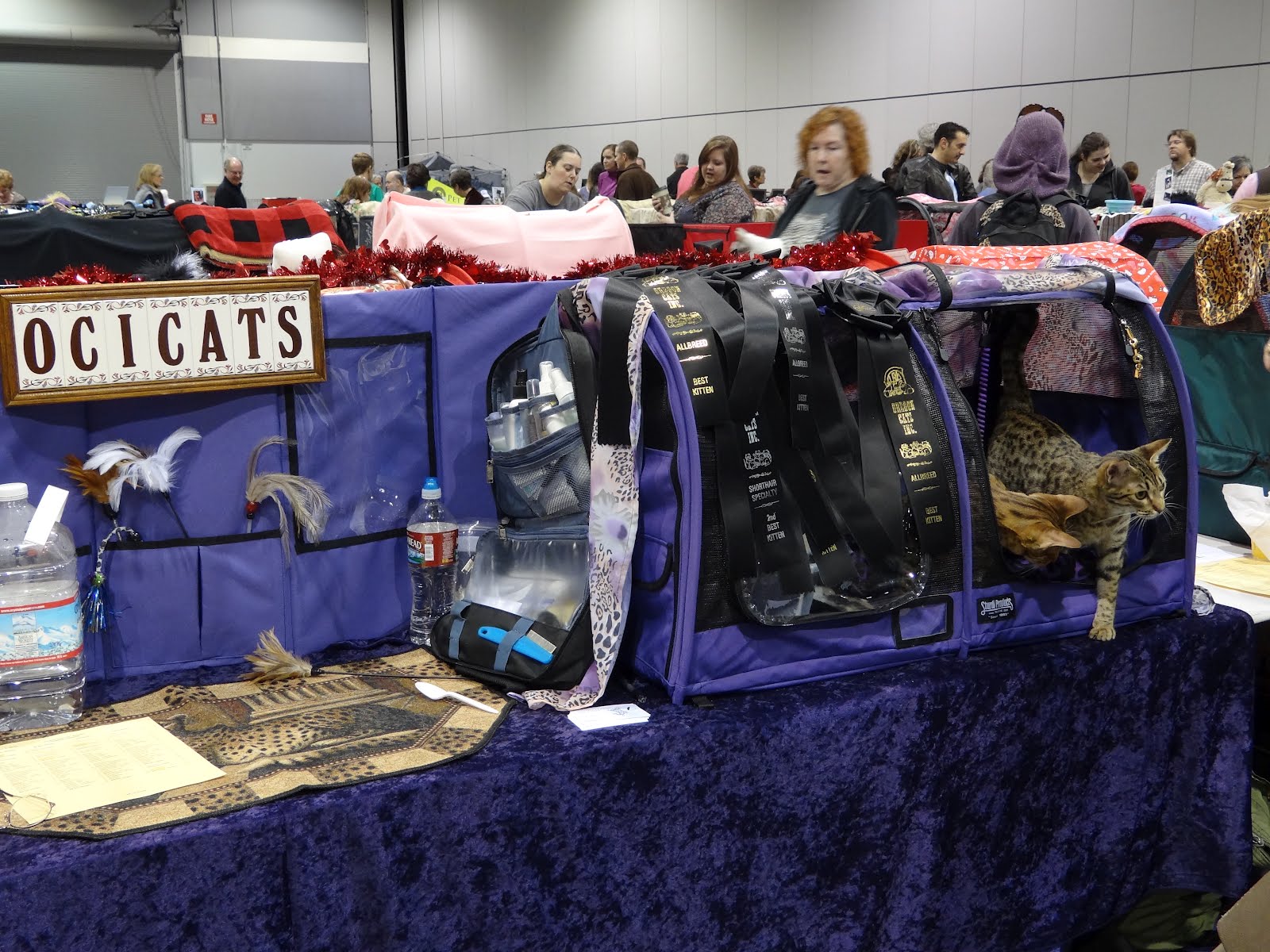
Last weekend, one of my secret dreams came true. I discovered that we had the opportunity to see not only: 1) about 250 (mostly) gorgeous kitties, but 2) over 250 freaky cat people! All in one place!!! Yes, the Cat Fanciers Association hosted the Oregon Cats Classic at the Portland Expo Center, just across the river from our fair city of Vancouver. In doing a little research, I came to discover that the show would feature “Championship, Premiership, Kittens, Household Pets, Veterans and Agility”. Oh yes, you read that correctly: agility. For cats. As in an obstacle course. Which automatically means that I HAD to go. And just to let you know, I did get video of a cat running the course, but it’s at the end so you have to look at some pictures first!

Here’s what we saw:
Lots of cat-related license plates and bumper stickers in the parking lot.
A mess of crazy cat people in one room.
This friendly guy, named “Dances with Mice”.
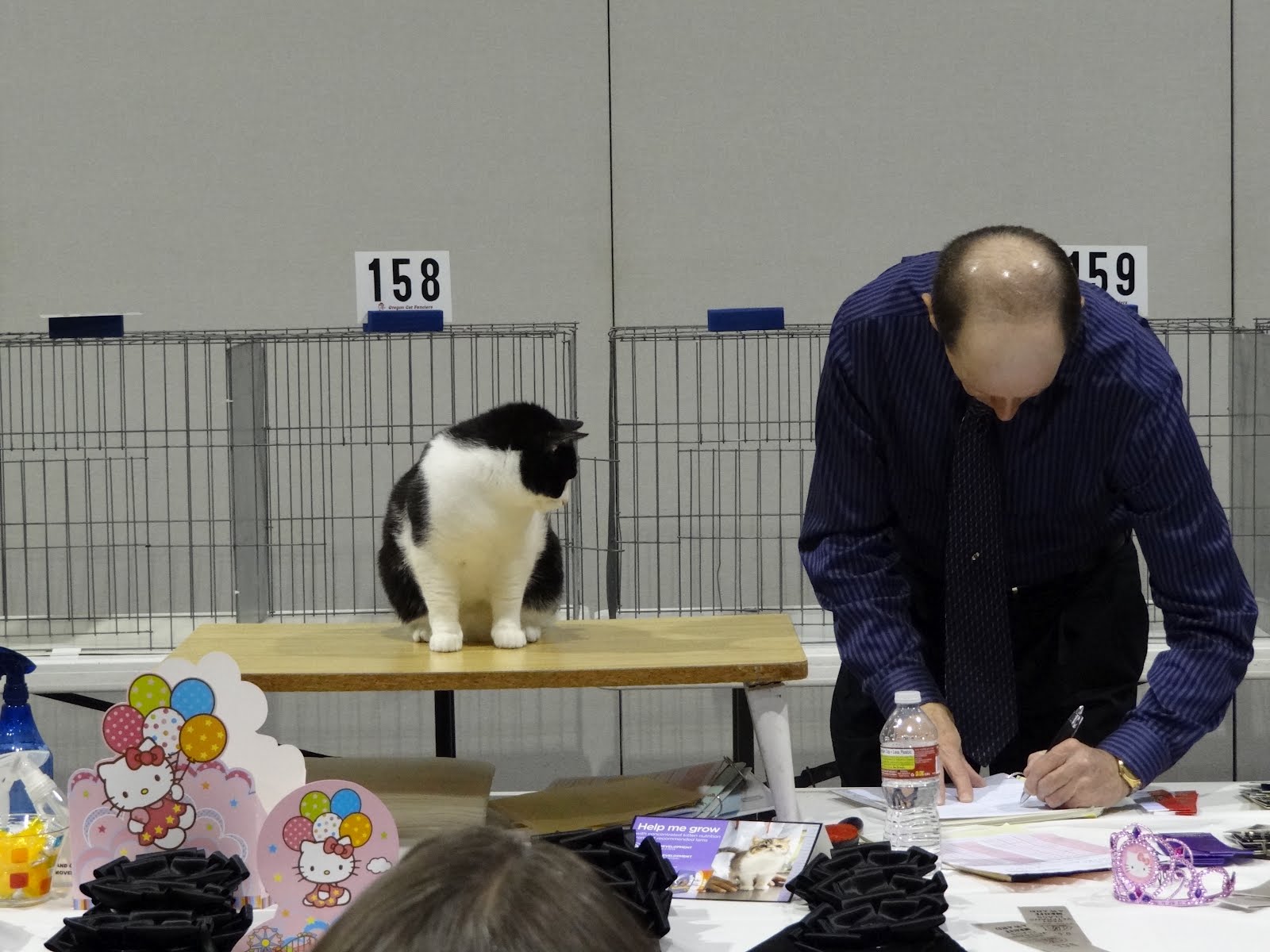
This dude, some kind of cat expert with very odd hair, giving ribbons to terrified cats huddled in the back of their cages.
Something that someone was trying to pass off as an actual cat (btw, the hearts and sparkles aren’t fooling anyone – that thing is definitely evil).
Rows upon rows of these little hoop hutches, decked out with ribbons, sparkly bits, toys, and cats (usually passed out).

Nearly all the Persian kitties were wearing coffee filters around their necks. Supposedly it was to keep them from licking and messing up their fur, but I think the real purpose was to teach those cats a lesson in humility, because god knows they need it.

More judging. This cat was clearly peeking at the score card and didn’t look too happy about what he saw.

Apparently, one of the criteria for a winning cat is that it has to be alive. To determine whether the cat is simply comatose and not dead, this tool is often used to elicit an instinctual reaction.
Apparently, the requirement of *NOT* scaring small children was not considered when making the rules for what creatures can participate in the cat show. Terrifying.

Cats do obstacle courses waaaay differently than dogs. This cat decided to take a 7th inning stretch mid-way through the agility course. It was highly entertaining watching owners frantically waving feathered toys and sparkle sticks at their cats, trying to get them to move in something other than a random direction on the course.

The “Pet Me” cats were generally pretty adorbs!

Ok, I guess you’ve been good and have waited long enough. This was the first cat we saw on the agility course and was the best by far of any we watched during the day. This one actually got through most of the course pretty quickly. Generally, the other cats either walked across the course and laid down, hid in the tunnels because they were freaked out, or stood there looking pissed about their handler daring to put them in a position of amusement and ridicule for the enjoyment of humans. Anyway, here you go!

So, coming back from the cat show, Chris and I decided a couple of things. First, our cats pretty much suck. We have five cats and only one or two really like to be petted (sometimes), only about half a cat could be considered a “lap cat”, and none of them would ever permit us to put them in a room with hundreds of other cats without causing a major disturbance or at least summoning an ambulance or two. We tried to trade in a few of ours, but there were no takers; we actually considered simply bringing Oliver there and just leaving him. But we’re kind of pussies too, so neither of those options worked out. And second, and keep this on the down-low…I might just be one of those crazy cat people. Shhhhh… (oh – and by the way – the cat show is coming back to Vancouver in June!!! Who wants to come with?)

And the 2011 Cat of the Year is…

Well, I hope you’ve all been working hard to figure out the best way to survive a zombie apocalypse. I’ll give you a few minutes’ break from your weaponry training for this bit of news: we’ve crowned the 2011 Cat of the Year! Can you guess who is is? Here’s a hint:


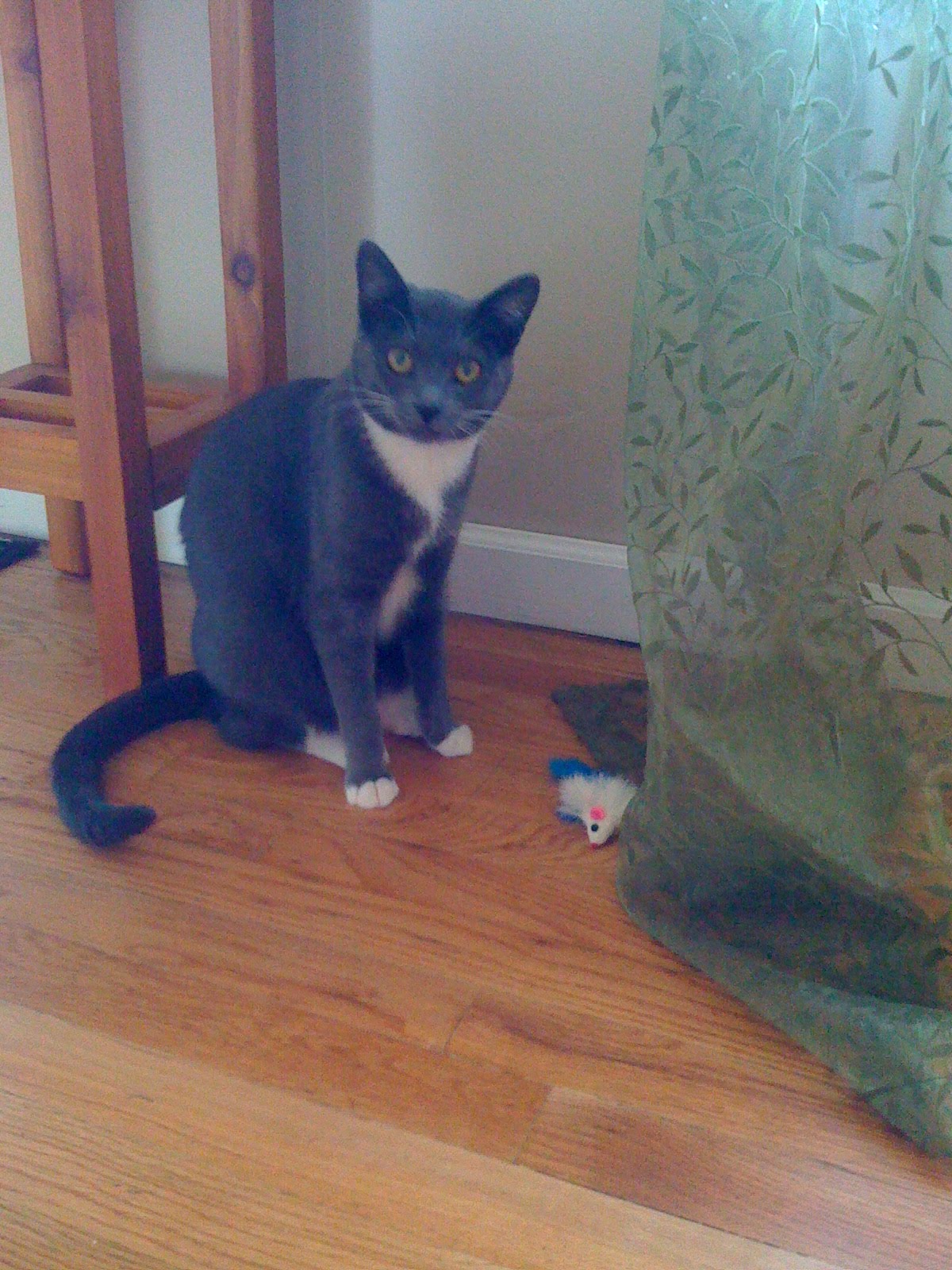
Yes, Samantha won Cat of the Year for her many fine feline qualities. For example, she excels at purring. Plus, she’s not afraid to get right up on you to let you know that you should squidgle her so that she can pur. Additionally, she loves to lick faces! She really is the most cat-like out of all of our cats, which can otherwise be considered as: 1) a butt-sniffing wide-load oaf (Oliver); 2) invisible (Momo); 3) a cranky old man (Jesse) and 4) a demonic mayhem-inflicting bruiser (Abbey).

Congratulations, Samantha! I hope you enjoy your reign as Cat of the Year! (And maybe shove it in the others’ faces a little bit more so they have something to strive for. They really should be showing better behavior if they want to ever win Cat of the Year.)

Now. Have you figured out the best way to de-brain a corpse that you’re not sure is infected by the zombie infection? No? Well, you’d better get back to your training then. Toodles!

Spider fun facts!

I did a little research, and within no time, I learned Shelob’s true identity: she’s a common European cross spider (Araneus diadematus). I don’t know why she came from Europe; presumably, she heard about how most of the humans on this continent are flavored with pork grease, corn syrup, and MSG. But you can see why she’s a cross spider – the white cross on her abdomen stands out clearly in the photo I took of her in my previous post.

Anyway, a couple of interesting things I learned about cross spiders. They are orb-weavers, and rebuild their large webs almost every day. Most suburban yards around here have over one hundred webs in them, which I can believe given the number of webs on our front porch alone. When creating the radial support lines for the web, the spider takes advantage of the morning winds (she often anchors them a fair distance away, so uses the wind to carry her to an anchor spot), and the orientation of the resulting web indicates the morning wind pattern.

Also, the females will perch upside down in the web (like in my pictures below) waiting for prey, and when something hits the web, she darts over, immobilizes it with venom, then wraps it up in silk. I actually saw Shelob do this with a bee a few weeks ago – she was crazy fast, and she wrapped that sucker up good and tight in no time.

But here’s what I’m really not looking forward to. In late summer and fall (now!?), the females will lay egg sacs, which hatch out about a gazillion little spiderlets that hang out in clumps then disperse after a few days. While spiderlets sound cute, you can be assured that several will reach adulthood and wreak havoc upon the local hobbit population (or whatever else that will make an appropriate substitute, since I believe Shelob consumed the last of our hobbits). I am not crazy about the prospect of finding over a hundred of these clusters in my yard any time soon:

Bleck!

I’m now thinking that telecommuting may be the way to go, permanently. I can send Chris out to get groceries and cat litter, and if he doesn’t make it back, well, I guess that means my arachnophobia-induced precautions will be validated. I haven’t seen Shelob in a few days now, but I’m sure that’s because she’s off laying egg sacs or planning something equally nefarious. I’m glad that I got some photos of her before she disappeared so that the police will have something to go on when they find, in response to a neighbor’s report about a “funny smell coming from the yellow house”, our cold lifeless bodies sucked dry and wrapped in silk.

Shit. I just read the rest of the spider website…I guess we’re coming up on Tegenaria duellica season: the season of the giant house spider, which are common in this area. And since I’m pretty sure it eats cats for between-meal snacks, I’m guessing I’m screwed.

This here is a giant house spider. Sorry, I did not get permission to use this photo, but it was the only one with a reference to scale so you can see how utterly horrifying this creature is. And our basement is likely chock-full of them.

And you thought I was kidding about Shelob…

So very wrong, you were!

On the bright side, I took these pictures with my new camera so I was able to maintain a relatively safe distance. On the down side, I think I still managed to piss her off because after a couple of minutes of invading her space she scrambled up underneath the porch rail, presumably to plot my demise and eventual consumption. So I guess that means that use of the front door (necessitating crossing into Her territory) is off limits, at least until the first frost. But maybe I’ll not take any chances and just wait things out until spring.

One small step for fish biologists, one great splash for bull trout!

**Please note: this is my personal blog and reflects my personal opinions. Any questions about this project relating to agency positions should be directed to either the US Fish and Wildlife Service or the Oregon Department of Fish and Wildlife. Thanks for reading!**

Sooo…this post is going to be about work. Which I rarely blog about, but last week was a good week, so I’m going to go ahead and share. One of the first projects I became involved with when I started my job here almost two years ago was the reintroduction of bull trout in the Clackamas basin, a little bit southeast of Portland. Bull trout once coexisted in the basin with a suite of native fish species including salmon and steelhead. However, bull trout disappeared from the basin in the 1960s (the last confirmed sighting was in 1963) largely as a result of overfishing and habitat degradation. So, now that many of the issues that caused bull trout to be extirpated have been addressed, the Fish and Wildlife Service, along with the Oregon Department of Fish and Wildlife and the Forest Service, decided that the time was ripe to reintroduce bull trout into the Clackamas to resume its spot in the ecosystem.

Bull trout in the Kootenai River drainage in Montana. Photo by Joel Sartore, National Geographic Stock (used with permission).

The reintroduction project has been in the planning phases since the mid-2000s. Bull trout were listed as threatened under the Endangered Species Act in 1999, and reintroducing them to a part of their native range falls under recovery actions planned for this species. Our office provides technical assistance to the regulatory folks, and it was my task to perform the preliminary bioenergetics modeling for bull trout, as well as lead the development of the Monitoring and Evaluation Plan for the project, which is anticipated to continue for up to 20 years (and perhaps beyond that). I am currently the chair of the M&E committee, comprised of biologists from several of the agencies involved in the project. It was a big task to complete the M&E plan, but a necessary one for a couple of reasons.

First, the bull trout population in the Clackamas is an experimental one. The major benefit of having a strong Monitoring and Evaluation program is that we will learn something no matter what happens – we will learn why the reintroduction succeeded or failed. Either way, we will know more about what might work for the recovery of this population as this project progresses, and ultimately for this species elsewhere in its range.

Second, we need to pay close attention to what these bull trout do in the Clackamas because there are other listed species in the basin, such as Chinook, coho and steelhead. In fact, this project has been fairly controversial because of concern for these other listed species, which makes it all the more important that we have a strong M&E program and dot all of our regulatory i’s and cross all of our regulatory t’s. Because bull trout are top predators, where these species overlap in time and space salmon and steelhead may face an increased risk of being eaten by bull trout. Of course, bull trout eat plenty of things other than salmon and steelhead (other fish, insects, etc.). But part of our monitoring program focuses on the interaction of all of these listed species so that project managers can take action if it looks like the impacts from bull trout are greater than anticipated.

Anyway, there’s a bit more to the story, but I’ll cut to the chase. Last week was a big week for us because we finally completed all of the regulatory requirements needed to get fish in the water. About 30 subadult and adult bull trout were collected from the Metolius, implanted with radio tags so we can keep track of their whereabouts, trucked over to the Clackamas, and released in the Big Bottom portion of the upper basin. Yay! There was a fair amount of press there, and it was great to see these beautiful fish swim in waters they hadn’t seen for 50 years. Let’s just hope they stay there! We’ll continue to move juvenils and subadults/adults through July, and our monitoring program will kick in almost immediately.

You can see some of the video footage and pictures that were taken here:

From the Oregonian – http://www.oregonlive.com/environment/index.ssf/2011/06/bull_trout_released_in_upper_c.html

From KGW News Channel 8 – http://www.kgw.com/video/featured-videos/Bull-trout-released-in-Clackamas-River-124829994.html

And here are some pictures I took – enjoy!

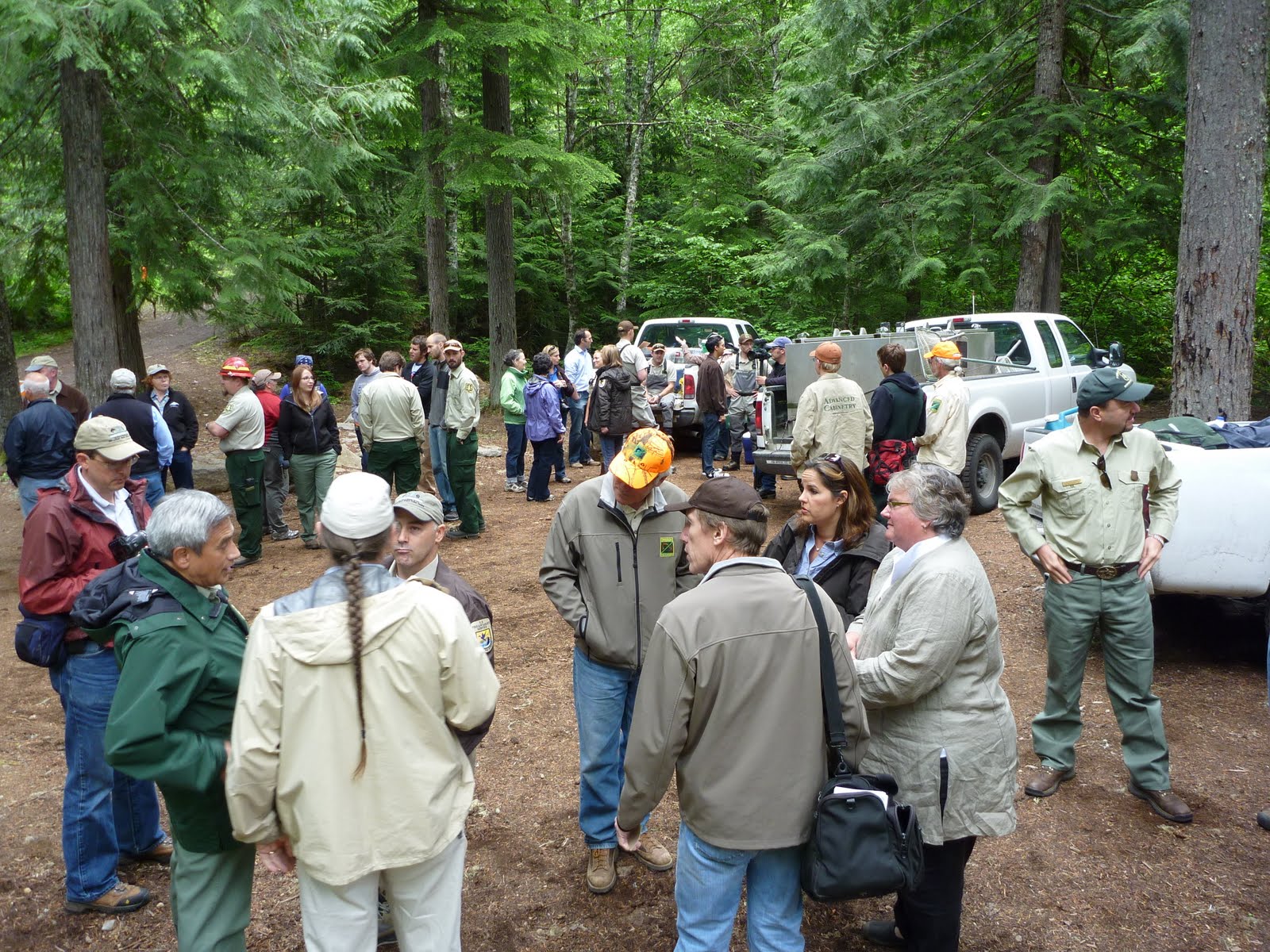
There were plenty of people on hand to witness the first bull trout release!
Above, this bull trout was just taken off the transport truck. The cooler was walked down to the banks of the Clackamas and the bull trout swam in the waters of its new home a few moments later.
This was the first bull trout back in the Clackamas! Good luck – we’ll be keeping track of you!

And the winner is…(drum roll, please)…

Welcome to the first annual Cat of the Year Awards! Each year, the Sigman-Koski family nominates, then votes for, cats who are deserving of recognition in several categories. I know what you’re thinking: cats and accomplishments? Isn’t that an oxymoron? Well, yes, but we feel that the cats who will be recognized tonight deserve the bravado, even though they may not have accomplished much (if anything) in 2010. At the very least, the winners deserve some extra pets (scritches behind the ears and tummy squidgles will be delivered upon declaration of the winner). And at the very most, the winners may be presented with a CatAssTrophy! So ready your applause, for our award ceremony is about to commence!

Our first award tonight recognizes the cat with the Cutest Meow. Nominees are: Samantha (for her performance on top of the staircase wall), Abbey (for her displays any time you pick her up), and Momo (for her role in meowing when you look at her or reach down to pet her). And the CatAssTrophy goes to…..Momo! Momo’s high-pitched and lengthy meows are petite and exceptionally adorable, just like her! Congratulations, Momo!

Even though her meows are very expressive, Momo is also skilled in non-verbal communication. This look clearly says “WTF am I supposed to do with this?”

Our next award will go to the cat that demonstrates the Best Head-Butts. Nominees are: Jesse (for his lap-time performances) and Samantha (for her bed-time head-butt/purring dual role). And the winner for Best Head-Butts is…..Jesse! Jesse has mastered the head-butt, with variations in force, direction, and body position (he can head-butt while standing, sitting, walking, and laying down – amazing!). Way to go, Jesse!

Jesse: Head-Butt Champion! And kind of a fan of flashing his junk! What a perv!

The next award is perhaps not as glamorous, but it’s an award just the same – Most Voracious Eater / Most Susceptible to Gravity. Nominees are: Samantha (who packed on a few pounds after giving birth to her kittens) and Oliver (who can force even the most determined cat away from the food bowl in order to stuff his own kibble hole). And the Most Voracious Eater / Most Susceptible to Gravity award goes to…..Oliver! Our very own Oliver (a.k.a. “Dirt Squirrel”) will go to any length to feed both his Oedipus complex and ever-expanding stomach…he still suckles from Samantha and gorges himself silly at any and all opportunities. Congrats, Oliver!

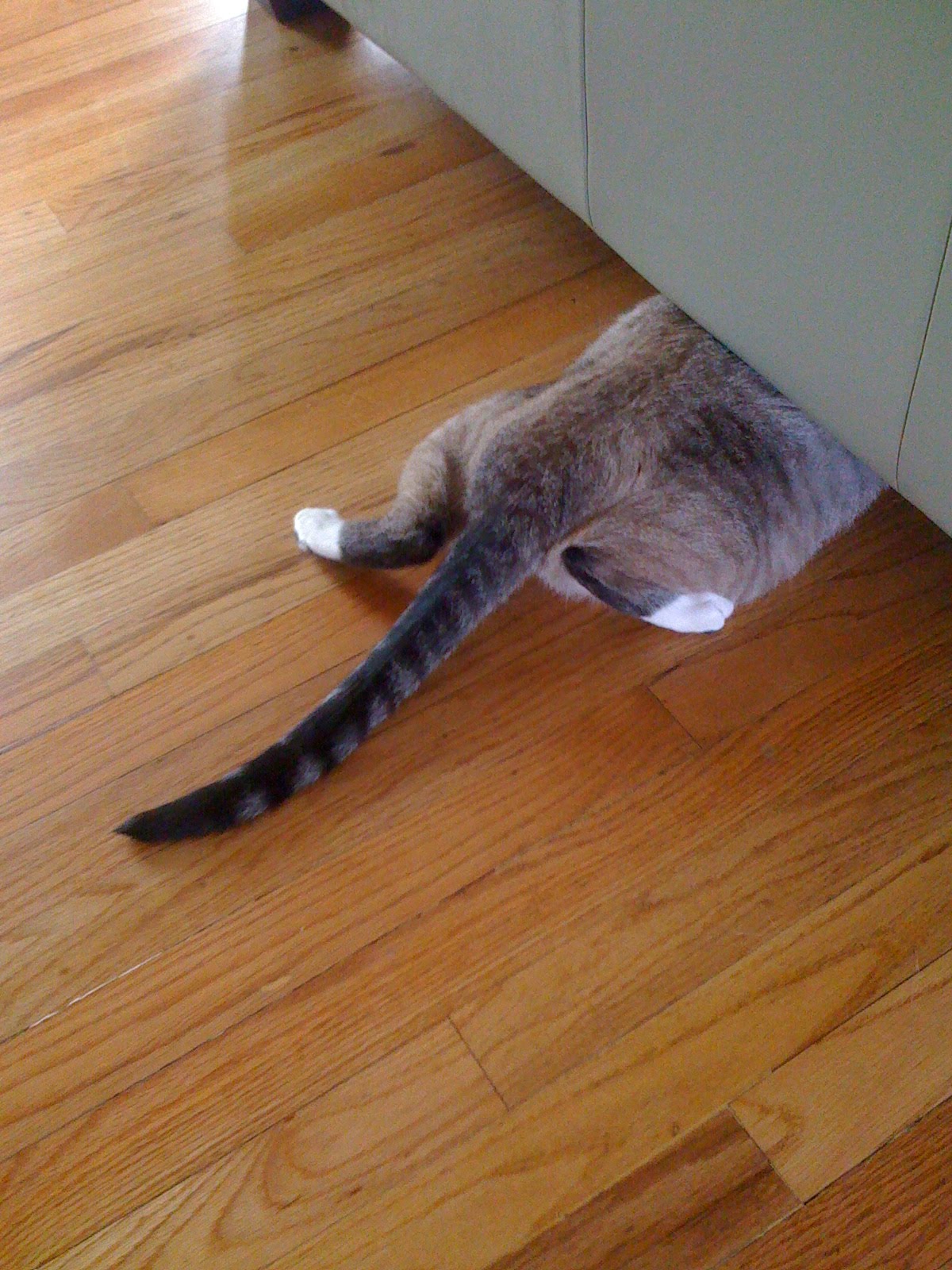
Oliver, demonstrating that it’s not so easy for the Best Eater / Cat Most Susceptible to Gravity to squeeze into tight places.

Next up is our award for Most Cunning Cleptomaniac. The nominees are: well, there’s just one, really – Abbey! Subsequently, by default, the CatAssTrophy goes to…..Abbey! Abbey uses her adorable looks and kittenish personality to make off with a wide variety of items including gift-wrap bows, receipts from out of your purse, and even cold hard cash (we think she’s using it to support her crack habit). Upon procuring each item from even the most secure locations, Abbey dashes off with the contraband in her mouth, stashes her prize, then proceeds to shred, bat, and scuttle the object noisily across the floor while you’re trying to sleep in the wee morning hours. Quite an accomplishment, Abbey!

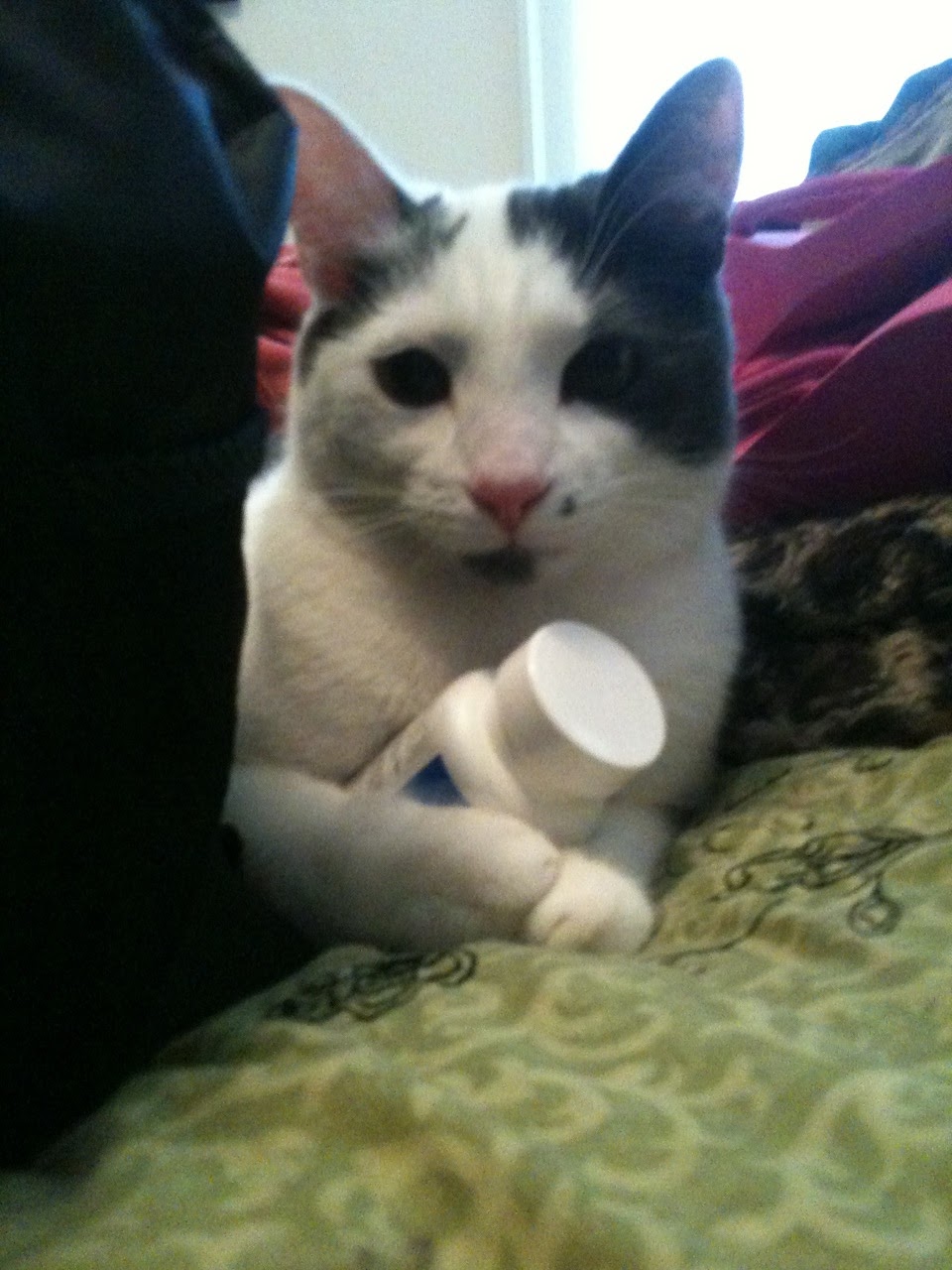
Abbey shows off one of the many prizes she has clepto’ed. Will she take the pills herself or trade them for crack?

Before presenting our final award, we have one more category: Best Snuggler. The nominees are: Samantha (for her performance in morning bedtime snuggling), Oliver (for his default role as fatso who collapses wherever gravity puts him), and Jesse (who has demonstrated significant accomplishments in upon-lap napping and stretching). And the CatAssTrophy goes to…..Samantha! Samantha not only knows how to try and keep you in bed longer than you ought to be, but is also quite accomplished in hair/scalp massage techniques and making muffins with her happy paws. Congratulations, Samantha!

Sam (right) demonstrates the techniques with Oliver (left) that earned her the Best Snuggler CatAssTrophy.

And now, the award you’ve all been waiting for: 2010 Cat of the Year. Excited, aren’t you? While all five cats were nominated for this achievement, some of them took themselves out of the running with ill behavior or by not giving a crap (you’re surprised we had any cats left who were worthy, huh?). Two cats rose to the top: Samantha and Jesse, for these two demonstrated a strong willingness to exhibit affection to humans, as well as other admirable qualities. Ok, we won’t keep you waiting any longer…and the winner of the 2010 Cat of the Year CatAssTrophy is…..JESSE!!! Jesse won overall cat of the year for his mild-manner, amusing meows (or croaks, really), fluffiness, adept snuggling and head-butting skills, unique ability to tame the beast (a.k.a. Abbey), and propensity for purring excessively. Jesse spent many years playing second fiddle to the late Zoe, which he passed with patience and humility. To top it off, Jesse turned 12 years old on January 3, making him the senior cat of the house! Happy birthday and congratulations, Jesse! Your picture will be featured on our “Cat of the Year” plaque, along with your name and year engraved to commemorate your accomplishment!

The rest of you felines can be jealous all you want…but I suggest you start sucking up now if you want to win any 2011 awards!

Jesse, 2010 Cat of the Year!

M is for…wait for it…

…Montana! Ha – I’ll bet you thought I was going to say M is for Marci! But I didn’t – I know, shocking, right? Well, it still is for Marci, but as I initially stated, M is also for Montana. Which is where I went just a couple of days after Chris and I returned from Alaska (July 13-15). I flew out to Kalispell, which is just outside of Glacier National Park. I’d only driven through Montana once, several years ago, so the whole place was pretty much new to me and I will say that I quickly learned that M is also for Magnificent. Yes, Montana is indeed Magnificent, Majestic, Marvelous, and M-pressive!

My trip was only Tuesday through Thursday, and much of the time was spent in a meeting room in Whitefish, just a stone’s throw from Kalispell. I was there for a bull trout recovery planning meeting and while it was slightly dry (as opposed to wet, which fish tend to need), our group did get outside one afternoon for a drive up Grave Creek in the Kootenai watershed. We were only a few miles from the Canadian border, which you can see in this picture – there’s a line cut through the trees to mark the interface of our countries. How’d you like that job, trekking through some of the most rugged land in our continent to cut down and maintain a tree-free line?

The Canadian border from the headwaters of the Wigwam Basin.

The following day I was able to spend a couple of hours driving around the south end of Glacier National Park. I found Lake McDonald and the views of the mountains particularly stunning, but the drive through the forest was interesting too.

Lake McDonald, with several peaks in the background (from left to right, Mt. Vaught, Mt. Cannon, Mt. Brown, Little Matterhorn, and Edwards Mountain).

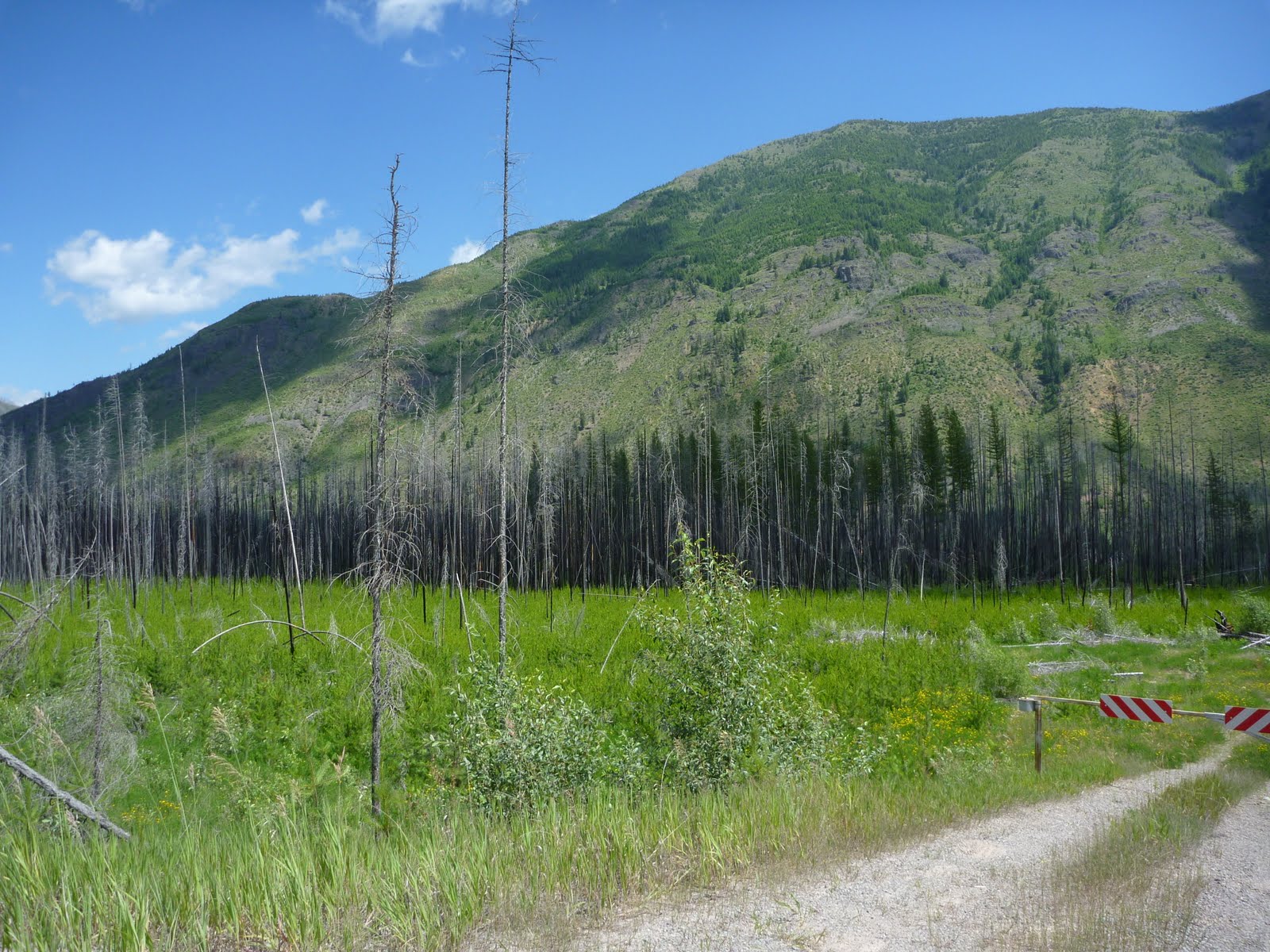
Large portions of the forest had burned in wildfires which made the trees look like skeletal toothpicks – you might think this would be not so picturesque, but you could see the topography of the landscape really well instead of just driving down a thickly wooded corridor. Additionally, seeing the forest regenerating with new growth and baby trees was a reminder that forest fires are a natural part of ecosystem processes, and that they benefit the native species that have evolved to survive with fire as a part of their environment.

One of the burn areas. Note the burned, branchless trees in the background; the vibrant green groundcover is nearly a monoculture of lodgepole pine treelings that are about 2-3 feet high.

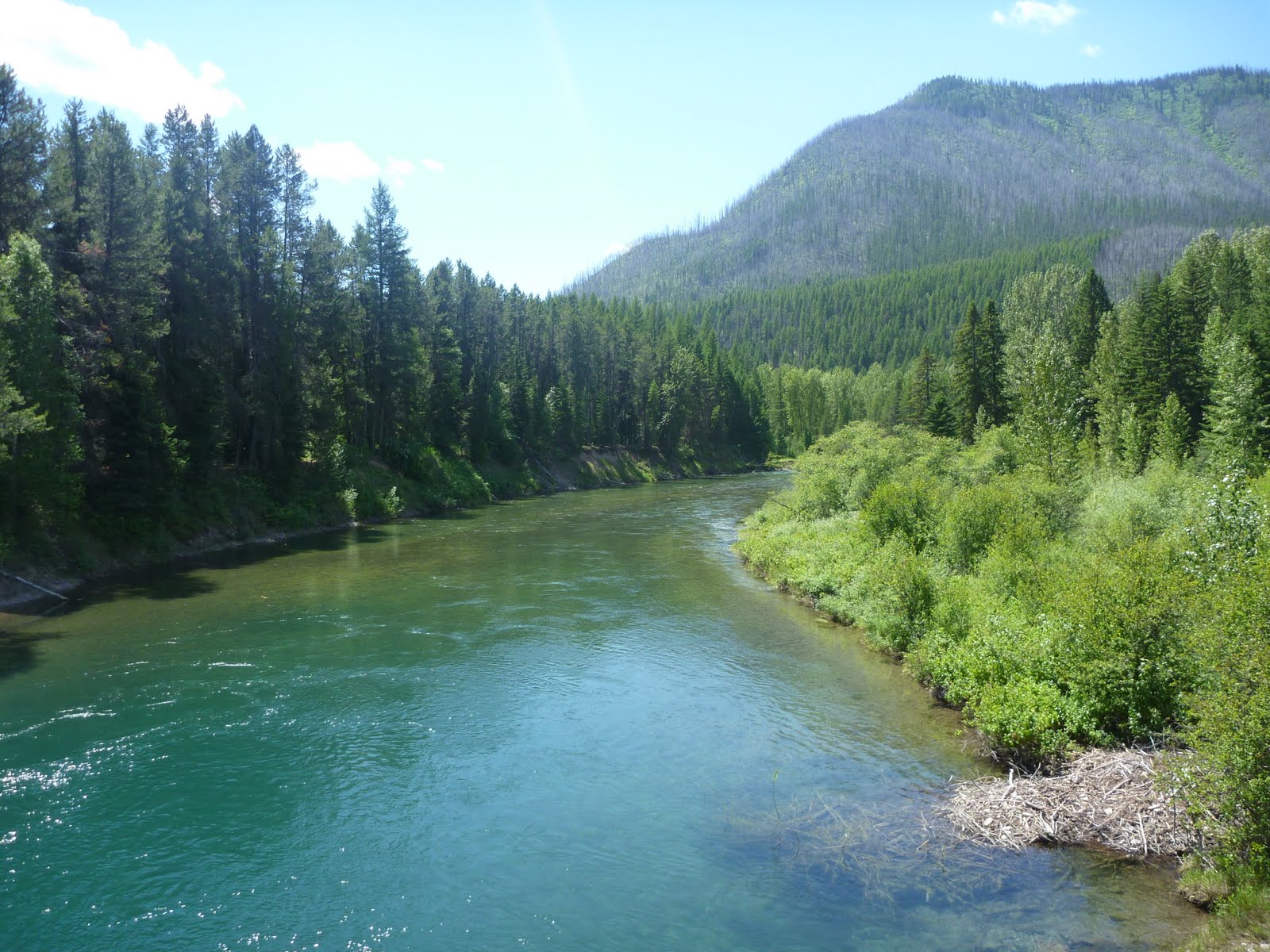
Anyway, the water there was incredible – aqua blue from the glacial till – and we took advantage of a shady spot next to the Flathead River to enjoy lunch (I accidentally left my prescription glasses there and had to return for them after realizing they were missing a half hour down the road…oops!). I’m glad I got to see the area, and now I understand why bull trout like to live there!

McDonald Creek – note the beaver lodge on the right that has been there for decades! I’d like to live there too if I were a beaver…